
Savor Comfort with Easy Korean Beef Noodles in Your Slow Cooker
Last Updated on February 12, 2026 by Kacper Recipes Team
When the crisp air of autumn settles in, there s nothing quite as comforting as a warm bowl of Slow Cooker Korean Beef Noodles. The moment I took my first spoonful of this dish, I felt an embrace of rich flavors, with tender beef swimming in a savory broth infused with garlic and ginger. Picture it: hearty noodles absorbing every bit of that succulent sauce, bringing a sense of satisfaction that only homemade meals can deliver.
After a long day, I often find myself craving something that not only warms the belly but also feeds the soul, and this recipe ticks all the boxes! It s incredibly easy to whip together; just toss everything in the slow cooker and let the magic happen. Whether you re feeding the family or hosting a gathering, this dish is sure to impress, giving you the luxury of delicious home-cooked comfort without the stress. Join me as we dive into this delightful fusion of flavors!
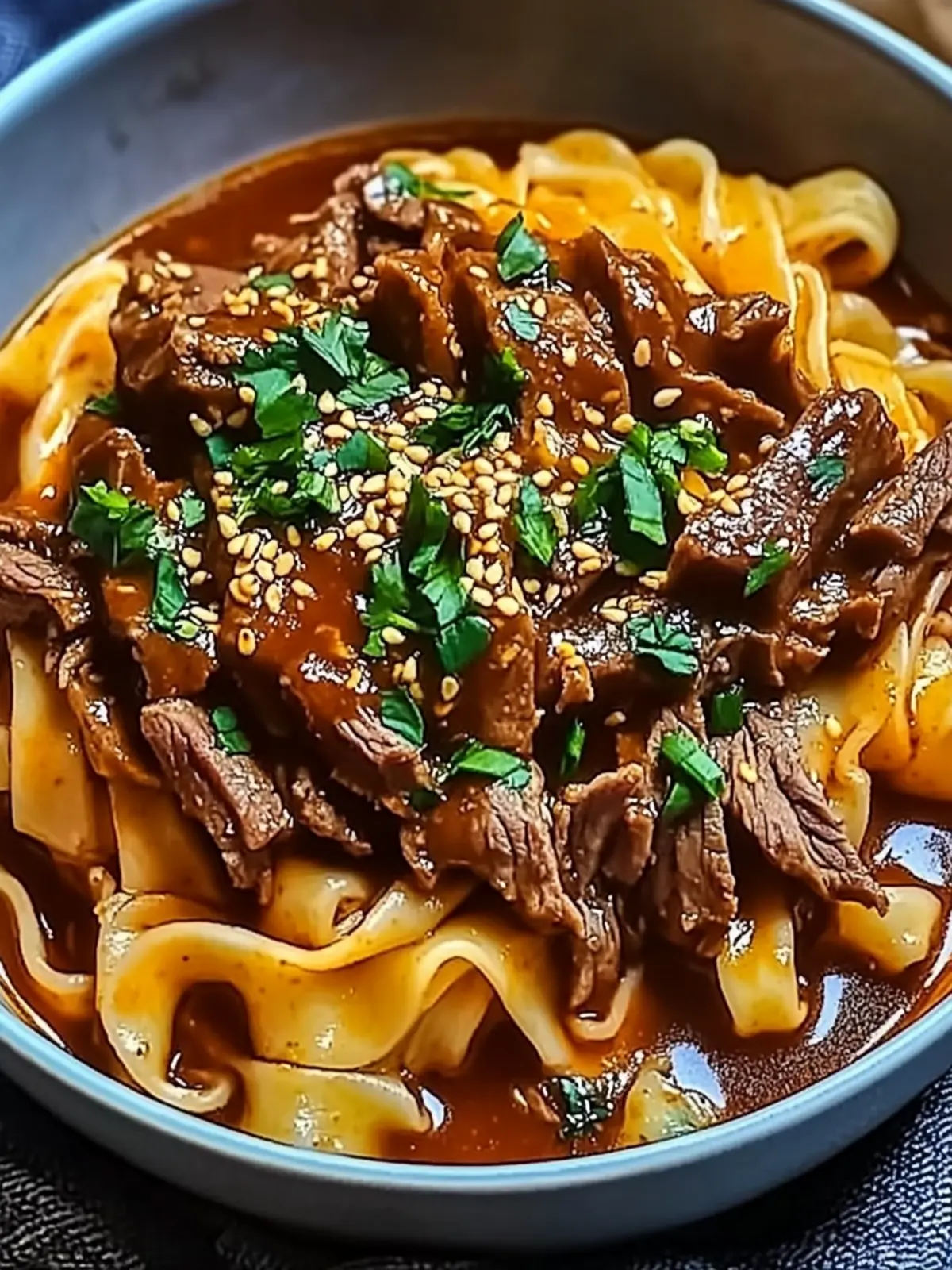
Why are Korean Beef Noodles a Must-Try?
Comforting Dish: These Korean Beef Noodles are like a warm hug on a cool day, combining tender beef with chewy noodles in a savory broth.
Effortless Preparation: With just a few ingredients and a slow cooker, this recipe simplifies your dinner routine.
Flavor Explosion: The infusion of garlic, ginger, and gochujang offers a robust flavor profile that delights every palate.
Healthier Alternative: This dish replaces fast food cravings with wholesome ingredients, making it an ideal choice for home chefs.
Customization: Easily adjust flavors or swap proteins, making it versatile for everyone at the table.
Feeding a Crowd: Perfect for families or gatherings, this recipe is sure to be a hit, delivering comforting satisfaction to all!
Korean Beef Noodles Ingredients
For the Beef
Beef Chuck Provides the main protein and richness; opt for well-marbled beef for tenderness.
Black Pepper Enhances overall flavor; freshly ground is ideal for a more robust taste.
For the Broth
Beef Broth Acts as a base for the sauce, adding depth of flavor; store-bought or homemade works well.
Water Used to dilute the broth, balancing the flavor.
Soy Sauce Offers umami and saltiness; low-sodium soy sauce is a great alternative for health considerations.
Brown Sugar Adds sweetness to balance the savory components; can substitute with honey or coconut sugar.
Ginger Adds warmth and spice; fresh is preferred, but ground can substitute in a pinch.
Garlic Converts the broth into a flavorful mixture; fresh garlic delivers the best taste.
Sesame Oil Provides a nutty flavor and aroma; for a more intense taste, use toasted sesame oil.
Gochujang Korean chili paste contributes heat and depth; adjust according to your spice tolerance or omit for mild flavor.
Black Pepper Freshly ground pepper enhances the overall taste and adds a touch of warmth.
For the Noodles
Noodles (udon or ramen) Forms the dish s carbohydrate base, adding substance; fresh is best, but dried works too.
For Garnishing
Green Onions Serve as a garnish, providing fresh color and crunch to your bowl.
Sesame Seeds Optional topping for added texture and flavor contrast.
Cilantro Optional garnish for a fresh, herbal touch that brightens up the dish.
Dive into creating your very own Korean Beef Noodles and enjoy the comfort of this easy-to-make meal!
How to Make Korean Beef Noodles
Prepare the Beef: Season the beef chuck with freshly ground black pepper. This adds depth and flavor, ensuring every bite is savory and satisfying.
Mix the Sauce: In a bowl, combine the beef broth, soy sauce, brown sugar, ginger, garlic, sesame oil, and gochujang. Stir until the sugar dissolves, creating a seasoned broth that s rich and flavorful.
Place in Slow Cooker: Add the seasoned beef and the sauce mixture to the slow cooker, ensuring the beef is well-coated for even flavor distribution.
Cook: Cover the slow cooker and set it to low for 6-8 hours or high for 3-4 hours. Cook until the beef is tender and easily shreds apart with a fork.
Prepare Noodles: About 15-20 minutes before serving, cook your noodles according to package instructions. Drain well, allowing the noodles to become perfectly chewy.
Combine: Gently fold the cooked noodles into the slow cooker, stirring lightly to incorporate them into the savory beef broth.
Serve: Ladle the mixture into bowls and garnish with chopped green onions, a sprinkle of sesame seeds, and fresh cilantro for a vibrant pop of flavor and color.
Optional: Serve with a side of kimchi for an added tangy crunch.
Exact quantities are listed in the recipe card below.
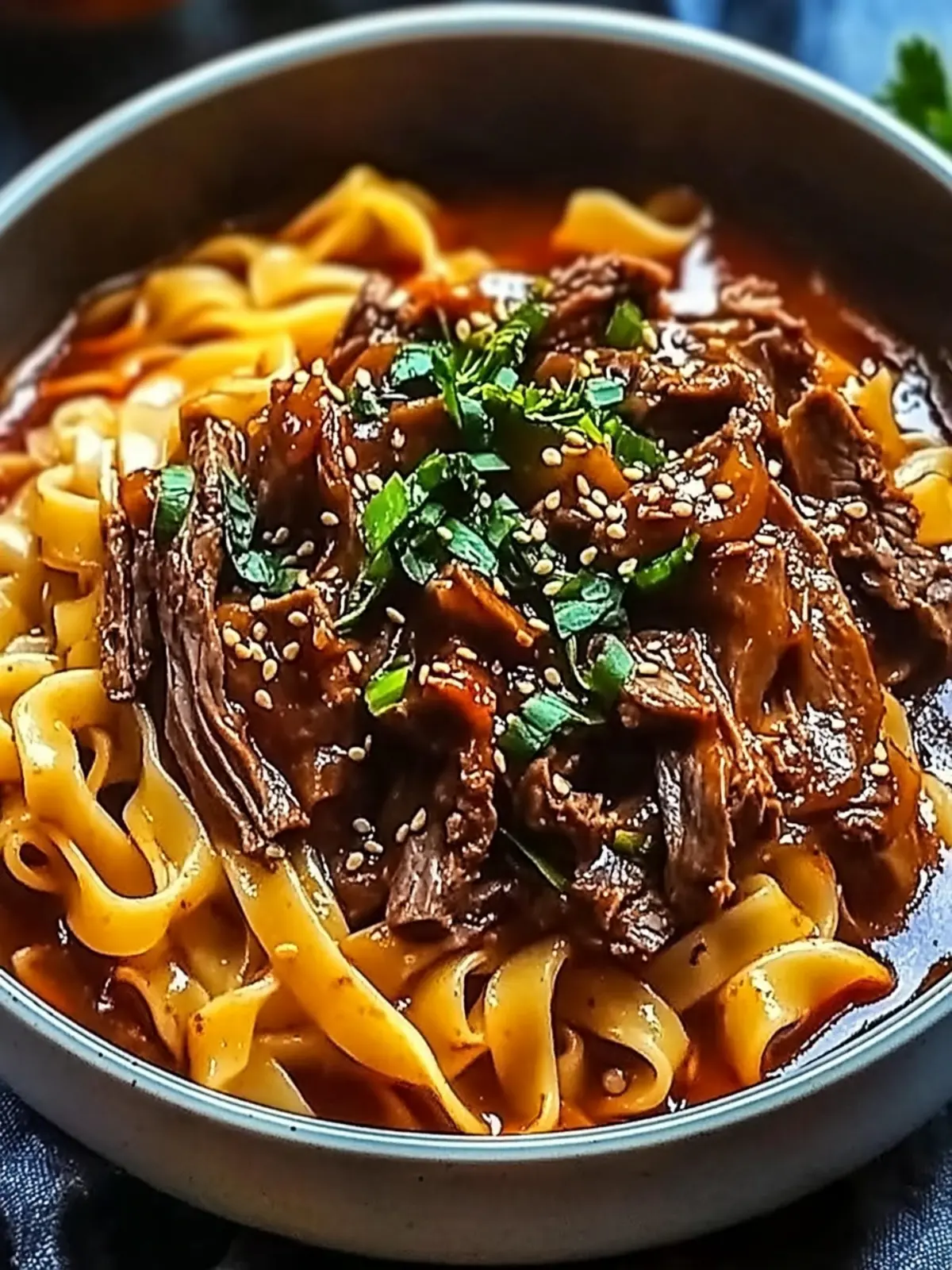
Korean Beef Noodles Variations
Let your creativity shine as you customize this hearty dish to suit your taste preferences!
Chicken Substitution: Swap beef chuck for chicken thighs for a lighter protein option that s still juicy and flavorful.
Vegetarian Tofu: Replace beef with firm tofu for a delightful vegetarian twist that still absorbs all that savory goodness.
Gluten-Free Noodles: Use rice noodles instead of udon or ramen to make this dish gluten-free without compromising on taste.
Veggie Boost: Add bok choy, bell peppers, or carrots to the slow cooker for extra nutrition and a colorful presentation!
Sweet + Spicy: Enhance the heat by adding red pepper flakes alongside gochujang for those who love a fiery kick in every bite.
Rich Flavor: Incorporate a splash of red wine or mirin into your sauce for added depth and a sophisticated flavor boost.
Coconut Creamy: Stir in a dollop of coconut milk at the end for a rich, creamy texture that adds a tropical touch.
Herb Infusion: Experiment by adding fresh herbs like basil or mint during the last hour of cooking for an aromatic lift that will surprise your palate.
Storage Tips for Korean Beef Noodles
Fridge: Store leftovers in an airtight container for up to 3 days. Ensure they are well-sealed to maintain flavor and prevent odors from other foods.
Freezer: Korean Beef Noodles can be frozen for up to 3 months. Portion them in individual servings for easy meal prep and thaw overnight in the fridge before reheating.
Reheating: When ready to enjoy, reheat on the stovetop or microwave until heated through, adding a splash of beef broth or water to retain moisture.
Noodle Storage: If storing noodles separately, keep them in an airtight container in the fridge for up to 3 days to prevent them from becoming mushy.
What to Serve with Korean Beef Noodles?
When enjoying a bowl of hearty, savory goodness, consider these delightful accompaniments for a complete meal experience.
Steamed Rice: A classic partner, its fluffy texture soaks up all the flavorful broth, making every bite satisfying.
Kimchi: This traditional Korean side adds a zesty crunch, perfectly balancing the richness of the beef noodles with its spicy tang. It s a must-have for any Korean meal!
Stir-Fried Vegetables: A medley of colorful veggies such as bok choy, bell peppers, and carrots not only provides nutrition but also brings freshness to the dish.
Sesame Green Beans: Crisp-tender green beans tossed in sesame oil brings a delightful nutty flavor and complements the savory elements beautifully.
Cucumber Salad: A refreshing salad with a hint of vinegar cuts through the richness, providing a crispy contrast that brightens the meal.
Hot Tea: Enjoying a cup of green or herbal tea can enhance the dining experience, helping to cleanse the palate between bites.
Chocolate Mousse: For dessert, a light and airy mousse completes the meal, offering a sweet ending that s both indulgent and luxurious.
Expert Tips for Korean Beef Noodles
Choose the Right Beef: Select well-marbled beef chuck for tenderness. This ensures that your Korean Beef Noodles have that melt-in-your-mouth quality.
Taste as You Go: Adjust the gochujang gradually based on your preferred spice level. A little taste test will guide you in achieving the perfect warmth.
Noodle Timing: Don t add uncooked noodles too early. They need only about 15-20 minutes before serving to maintain the ideal texture in your Korean Beef Noodles.
Season Generously: Properly season your beef with black pepper before cooking. This small step significantly enhances the overall flavor of the dish.
Garnish for Flavor: Don t skip the garnishes! Green onions, sesame seeds, and cilantro not only add color but also elevate the taste experience of your comfort dish.
Storing Leftovers: If you have any leftovers, store them in the refrigerator for up to 3 days. Reheating will keep the flavors intact while providing a comforting meal again!
Make Ahead Options
These Korean Beef Noodles are perfect for meal prep, allowing you to enjoy a hearty homemade dish with ease! You can prepare the beef and sauce mixture up to 24 hours in advance; simply season the beef chuck, mix the sauce ingredients, and store them together in the refrigerator. This not only saves time but also enhances the flavors as they meld overnight. The noodles can be cooked fresh just before serving, which keeps their texture perfect. When ready to eat, add the beef and sauce to the slow cooker, and set it to cook as directed. You ll get the same delicious results with minimal effort during your busy week!
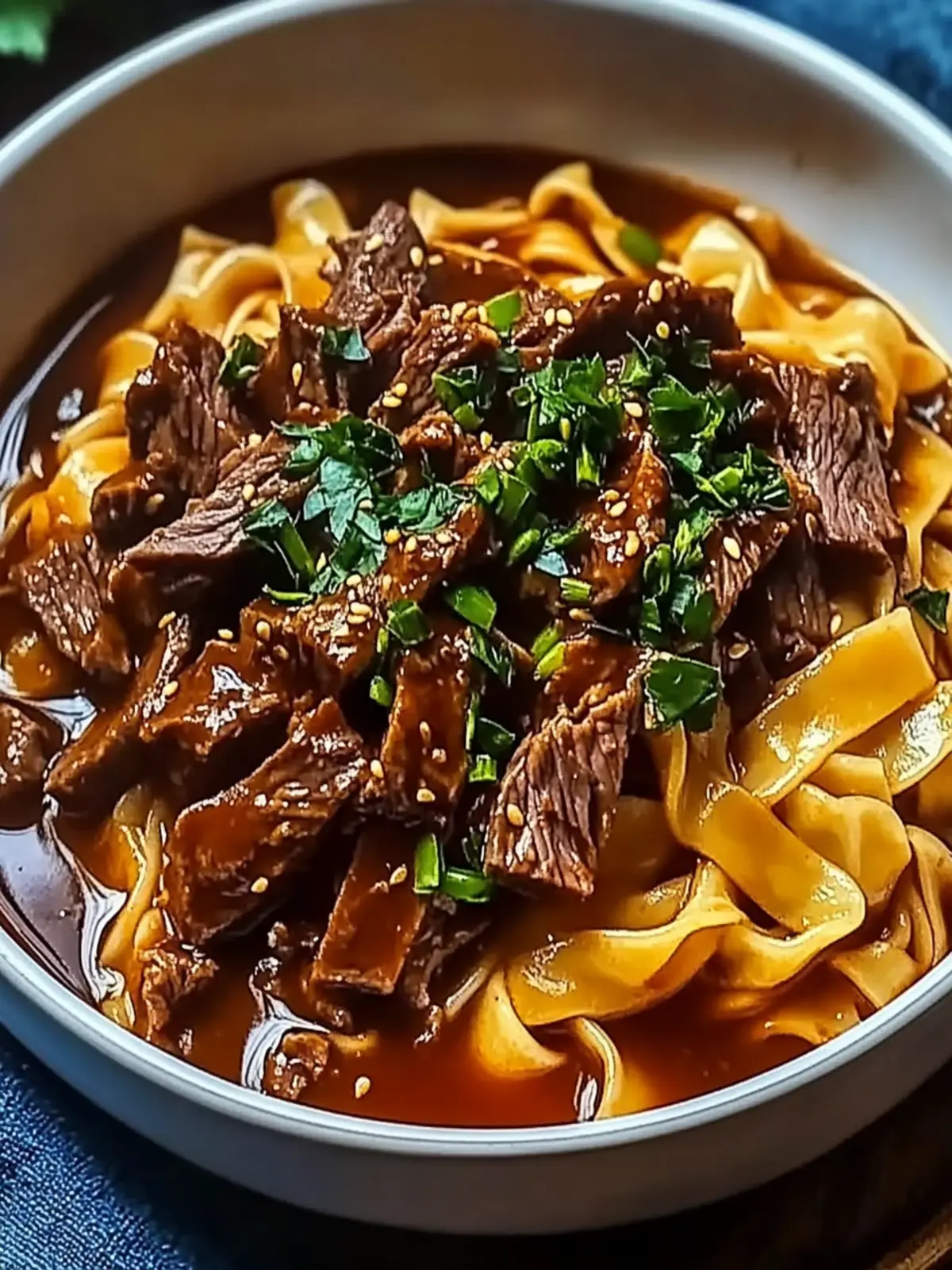
Korean Beef Noodles Recipe FAQs
What kind of beef should I use for Korean Beef Noodles?
Absolutely! I recommend using well-marbled beef chuck for its tenderness and richness. It breaks down beautifully during slow cooking, resulting in melt-in-your-mouth beef that enhances the dish s overall flavor.
How do I store leftover Korean Beef Noodles?
Store any leftovers in an airtight container in the refrigerator for up to 3 days. Make sure the container is well-sealed to preserve the flavors and prevent any unwanted odors from other foods in your fridge.
Can I freeze Korean Beef Noodles?
Very! Korean Beef Noodles can be frozen for up to 3 months. To do this, portion the noodles and broth into individual servings in airtight containers. When you re ready to enjoy them, simply thaw overnight in the fridge and reheat on the stovetop or microwave until heated through.
What should I do if my beef is tough after cooking?
If your beef is tough, it may need more cooking time. Slow cookers can vary, and if the beef hasn t broken down after the recommended cooking time, cover and cook it for an additional 1-2 hours on low until it becomes tender. Don t hesitate to check the beef tenderness periodically!
Are there any dietary considerations for Korean Beef Noodles?
Absolutely! If you re preparing this dish for a family member with allergies, make sure to check the soy sauce for gluten if they are intolerant, as many soy sauces contain wheat. Additionally, you can opt for low-sodium soy sauce to accommodate those watching their salt intake.